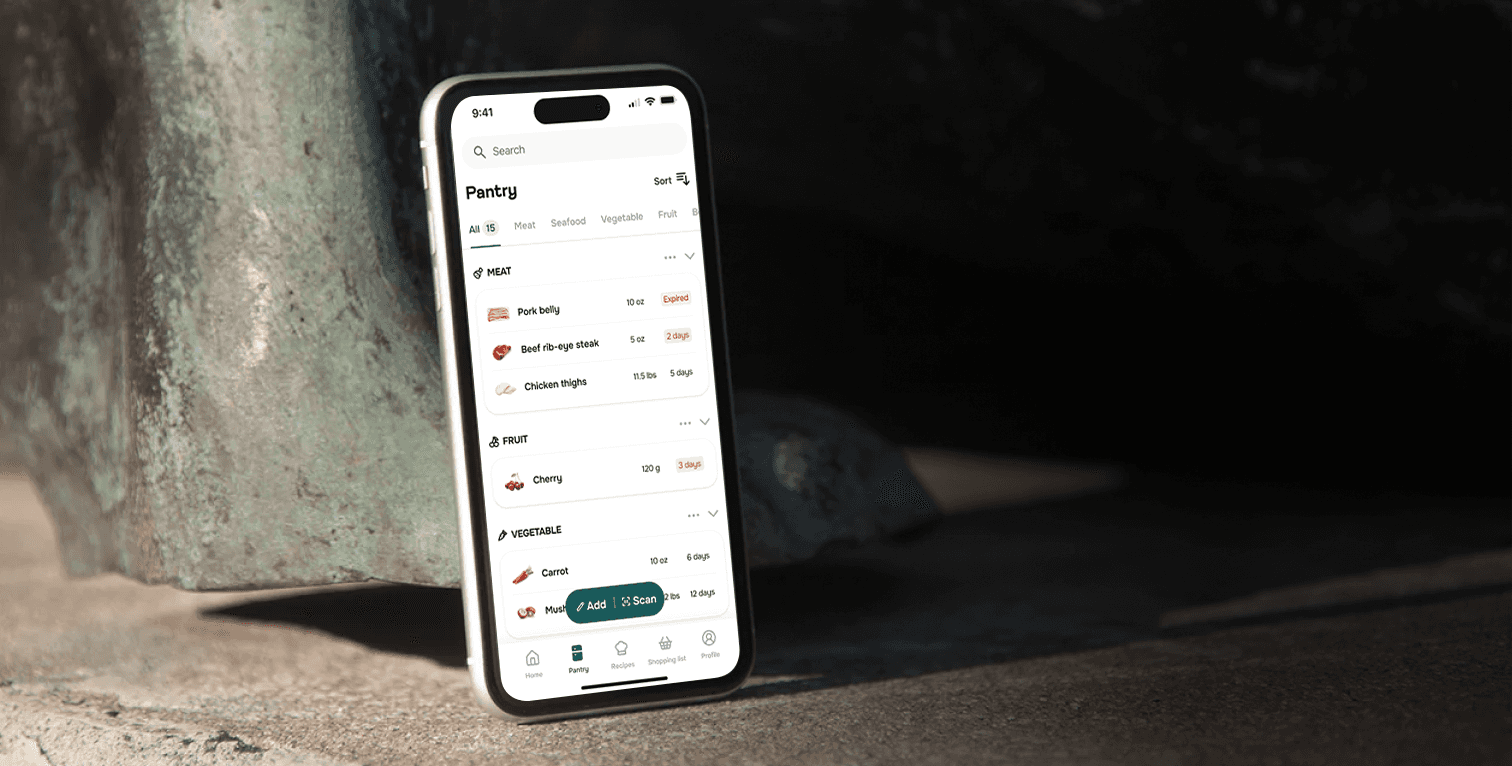
Freeshy
Food Waste Prevention App
Duration
Fall 2025
Contributors
Helen Nguyen
Anya Hamman
Role
Research
System Mapping
Wireframing
UI Design
Prototyping
Freeshy is a food tracker and savings app that focuses on aiding users in conquering their kitchen, utilizing the food that is easily forgotten in their pantry. Targeting young to middle-aged working class adults with busy schedules, Freeshy makes it convenient to find recipes that accommodate your dietary preferences while using up the food in your kitchen.
Problem
People do not waste food because they do not care. They waste food because life gets busy. Between balancing work, school, social life and daily household chores, time escapes us in adulthood, making it difficult to consistently actively plan out what to cook or eat on a day-to-day basis. This leads to people forgetting food in the back of their fridge and pantry, increasing food waste and wasting their money.
Everyone is so busy!
Audience
Competitive Analysis
To understand our audience more personably, we hit the market! As grocery prices continue to rise, managing food has become a balancing act between time, cost, and convenience. While many people try to reduce food waste through meal prepping, freezing, or deal hunting, these strategies often demand more effort, access, and planning than busy users can realistically maintain. As a result, people are increasingly relying on simple digital tools like notes apps, reminders, and grocery list platforms, not because they are perfect, but because they are familiar and easy to use.
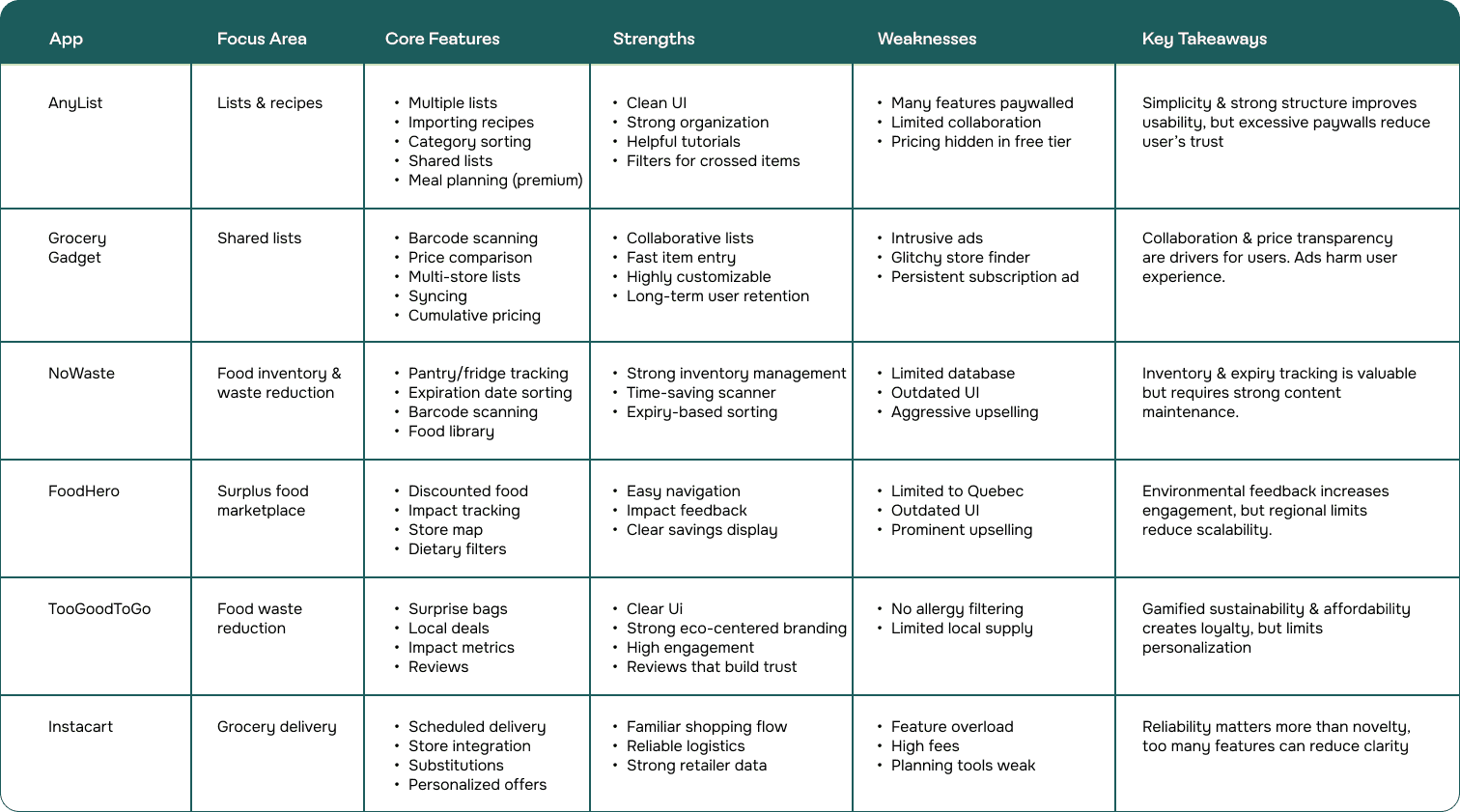
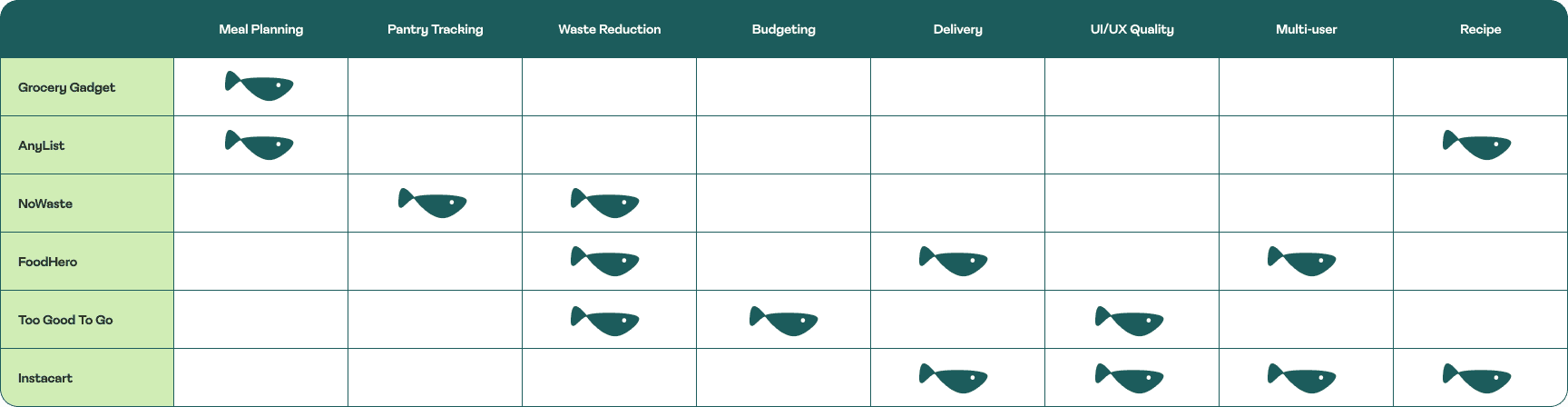
We conducted a competitive analysis of leading grocery, food waste, and delivery apps, including AnyList, Grocery Gadget, NoWaste, FoodHero, Too Good To Go, Instacart, and DoorDash. Each platform was evaluated based on its usability and core features. By reviewing patterns in their interfaces, onboarding flows, and user feedback, we identified key gaps in existing solutions, which helped guide our feature prioritization.
Competitor Analysis Key Insights
Summary of Features
User Research
Upon conducting a market analysis, as well as surveys and interviews, we noticed three main trends from our users.
Most users told us the same story. They buy groceries with good intentions, then forget what is already in their fridge or pantry. Food gets pushed to the back, expiration dates are missed, and items are repurchased unnecessarily. This made it clear that visibility and reminders are key to reducing food waste.
While sustainability matters, most users were not actively making eco-conscious grocery decisions. What did resonate were tangible benefits like saving money, using what they already own, and getting easy meal ideas. Positive reinforcement and gentle guidance proved far more effective than guilt-driven messaging.
Our users were working adults with limited time and low to middle income households. Meal planning often happens on the fly, and budgeting is a constant concern. Many existing apps felt too tedious to maintain, which showed us that any solution needed to be quick, simple, and worth the effort.
01. Forgetting what’s already there
03. Motivation works better than guilt
02. Busy lives, tight budgets


User Personas
Information Architecture
Since users struggled most with remembering what they already had, managing tight budgets, and finding quick meal ideas, we organized the app around these core needs rather than around features. By prioritizing visibility, simplicity, and shared access, the structure of Freeshy helps users move easily from “what do I have?” to “what can I make?” without unnecessary steps.

Wireframes
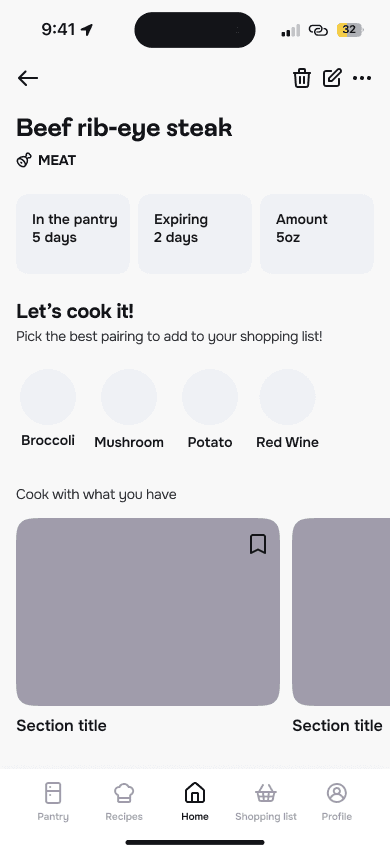
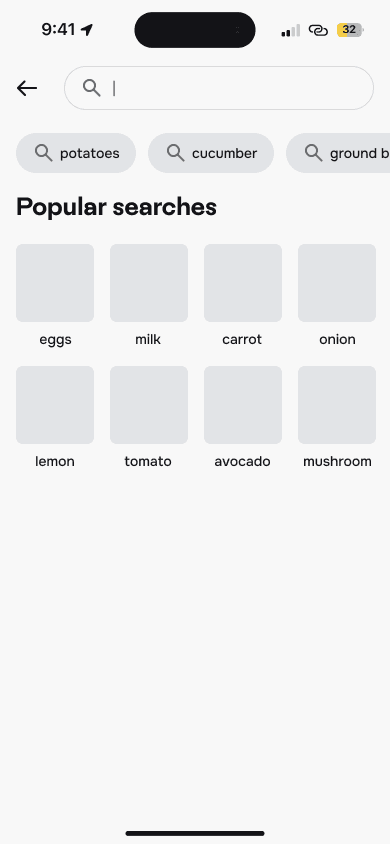
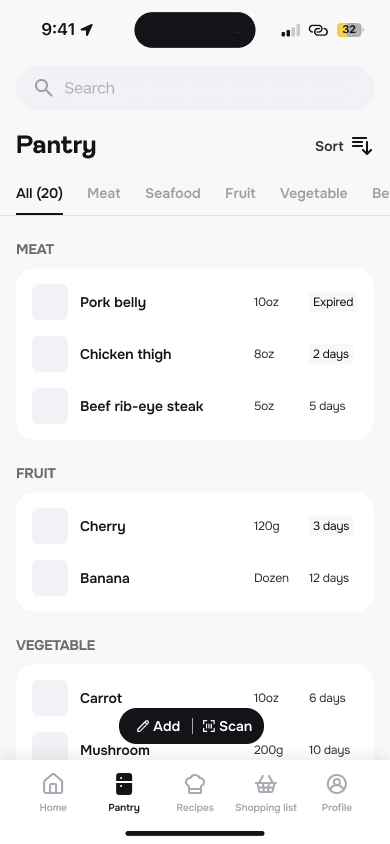
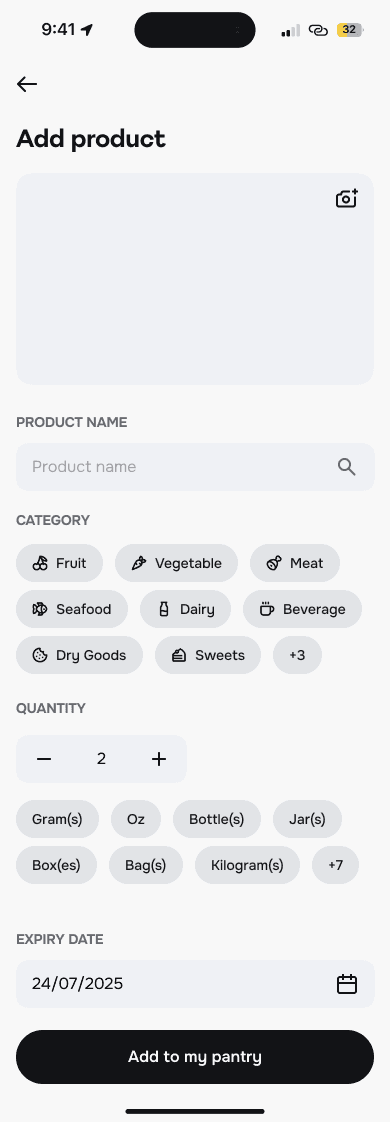
Based on our information architecture, wireframes were developed to visually showcase the user-flows.



Branding
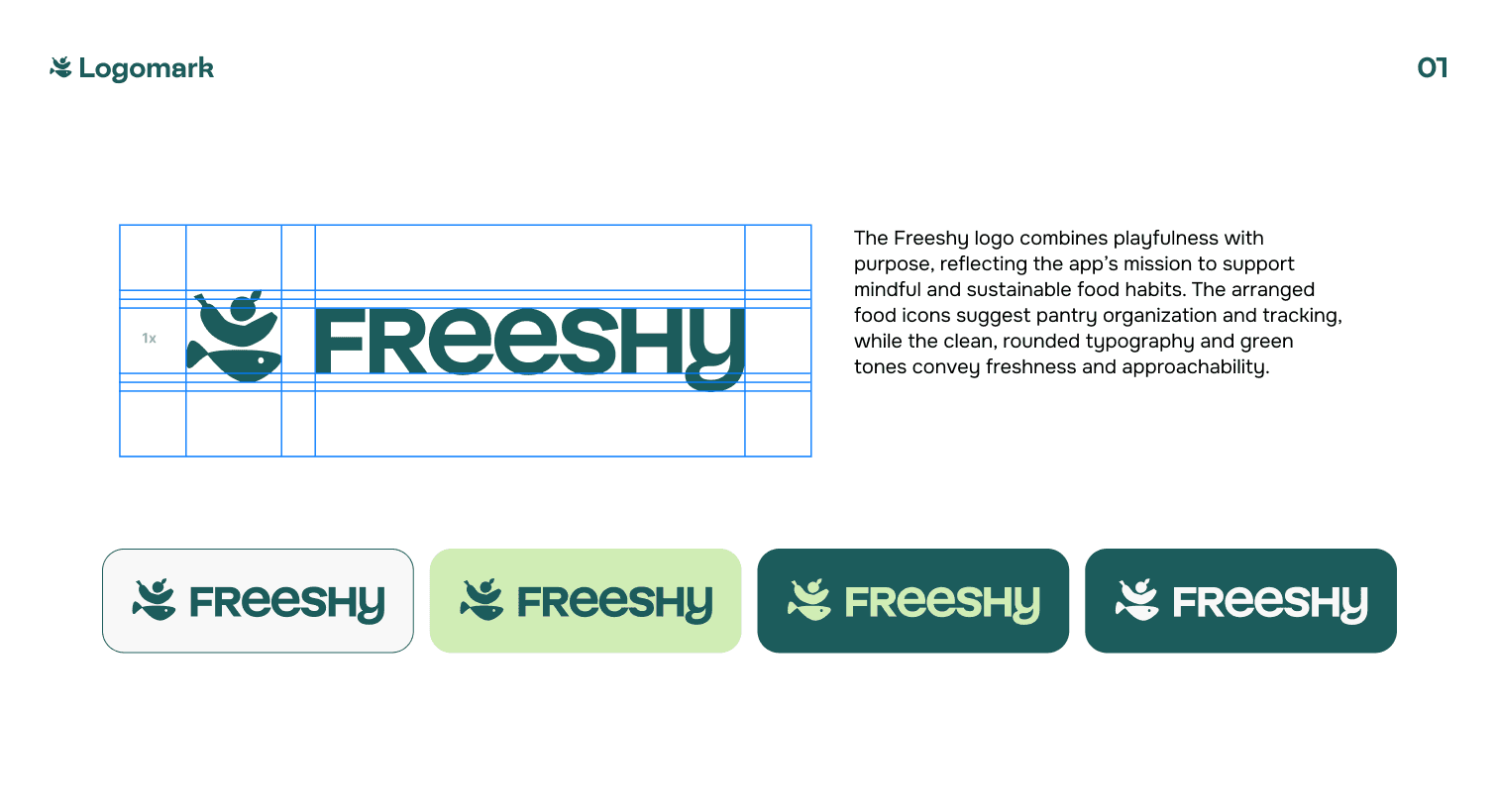
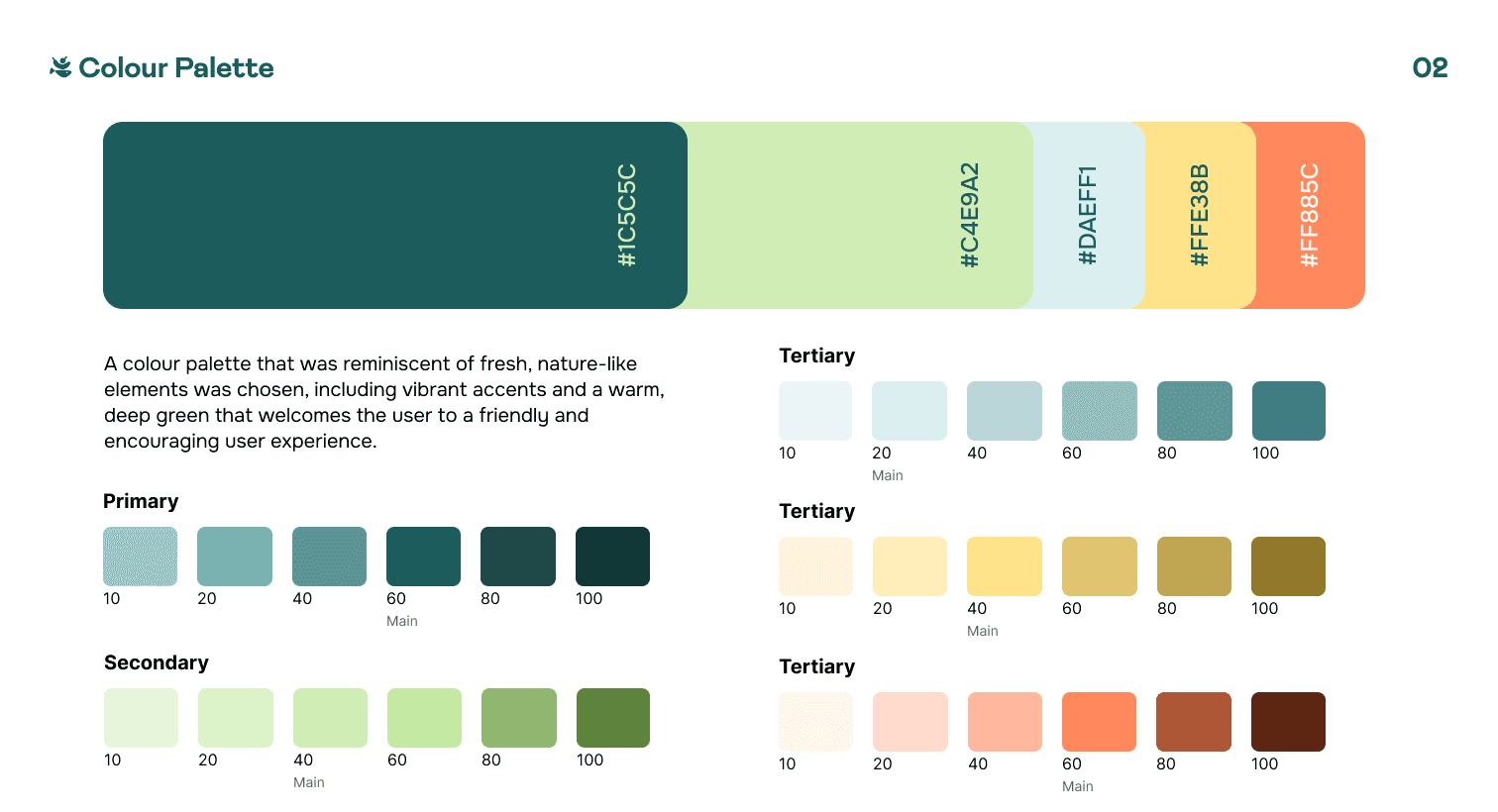
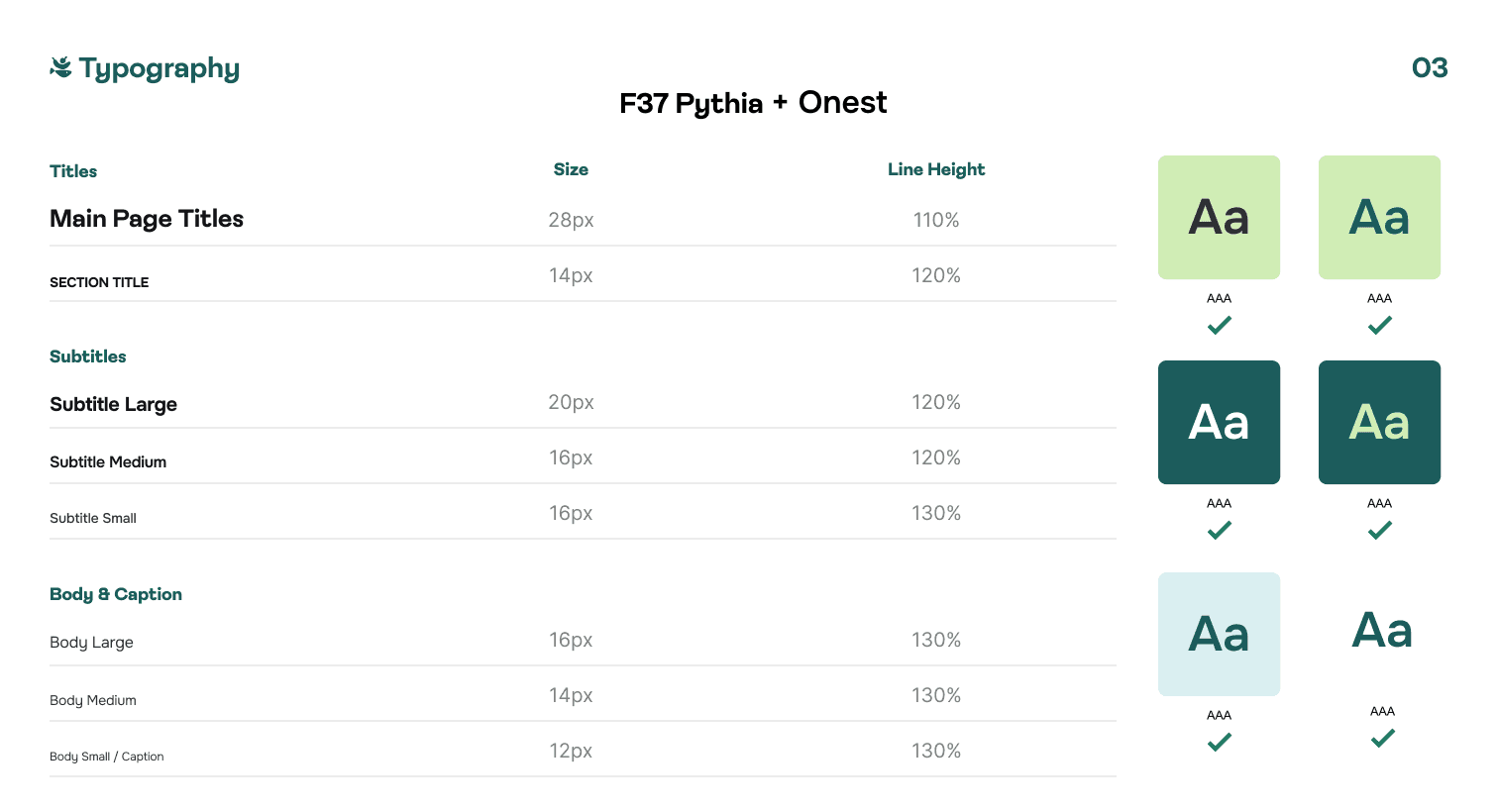
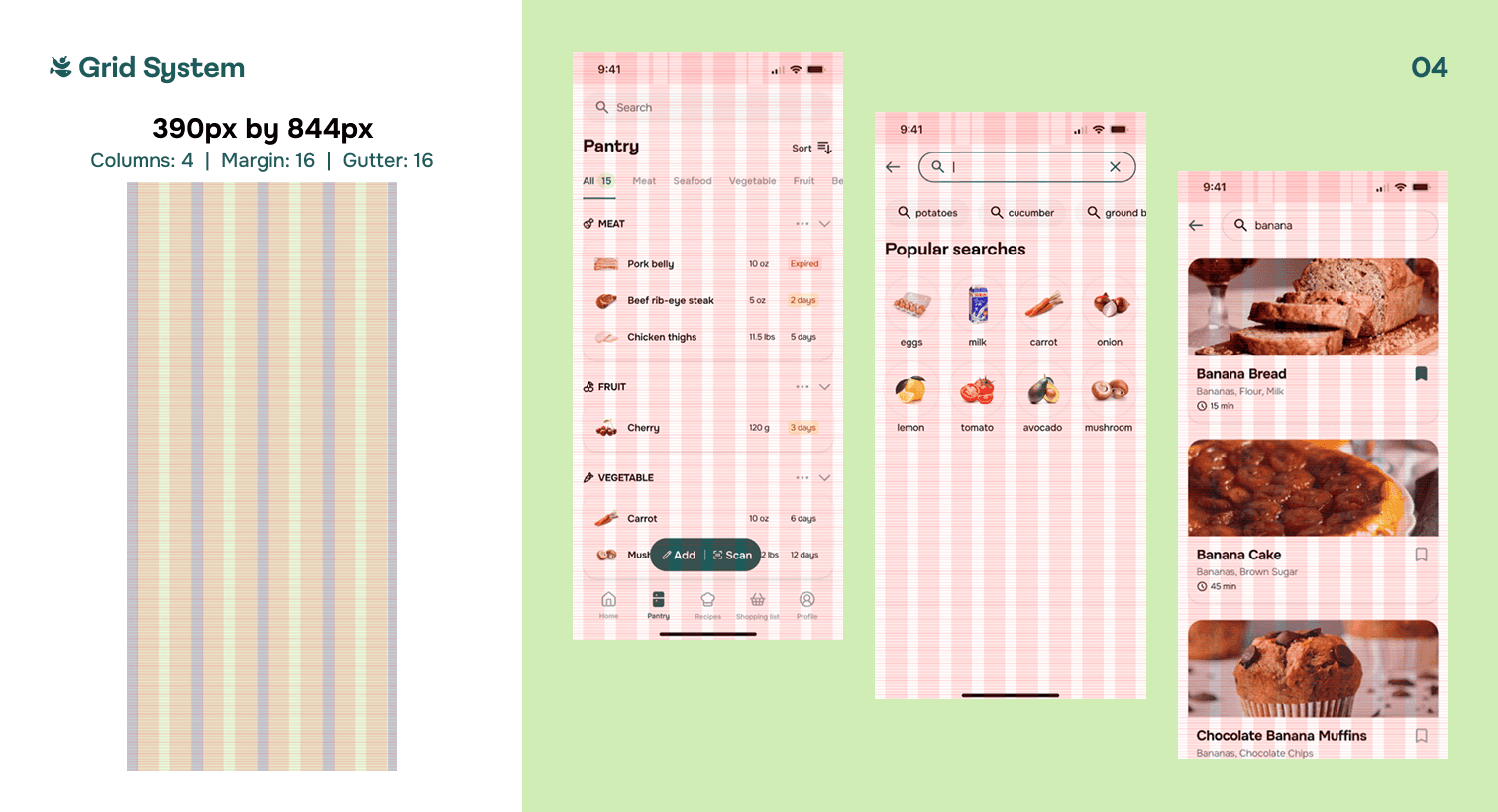
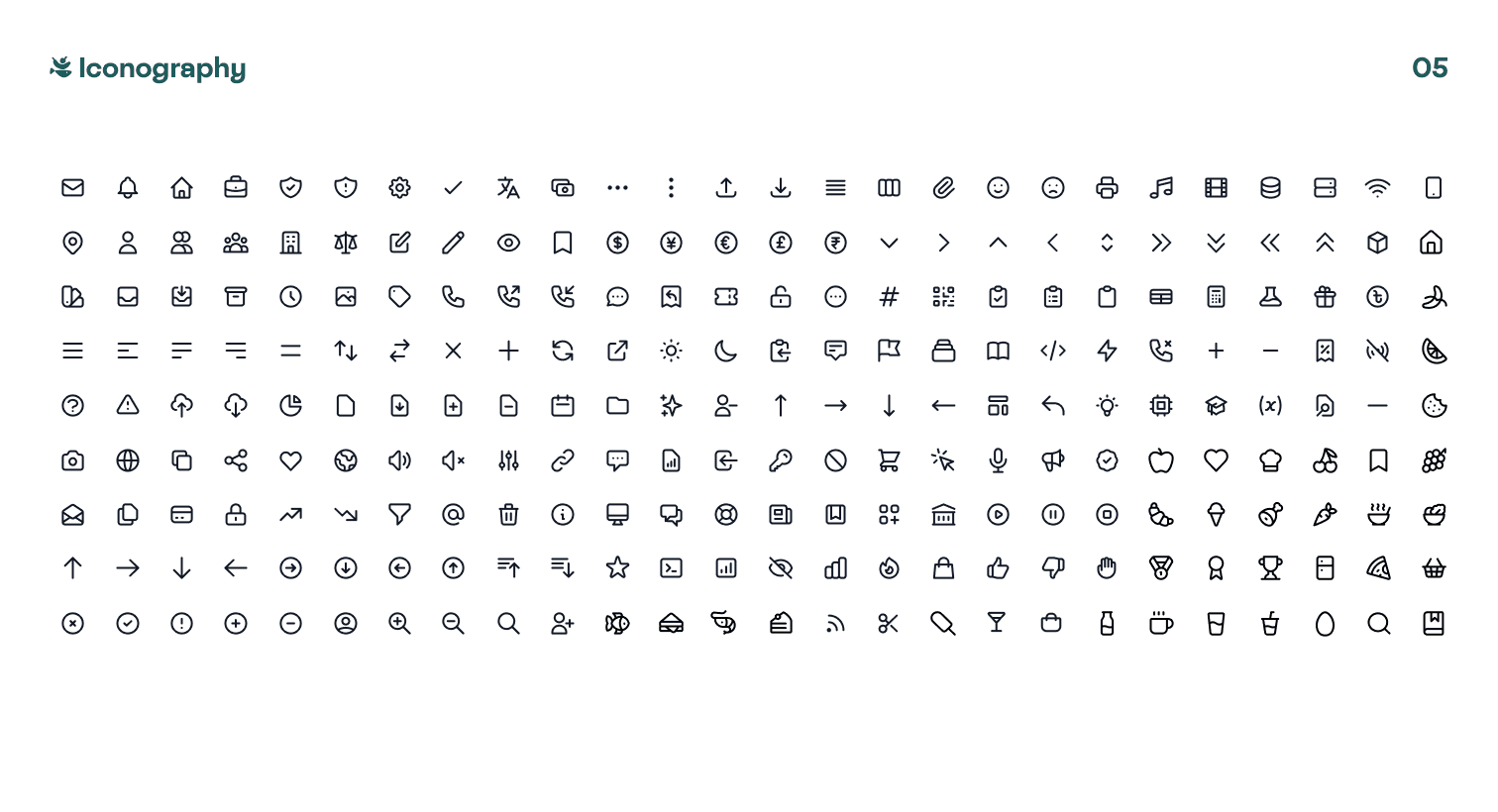
Freeshy values being quick, easy, and encouraging, leaving no food left untouched. With this identity in mind, a visual design guideline was developed.

Design
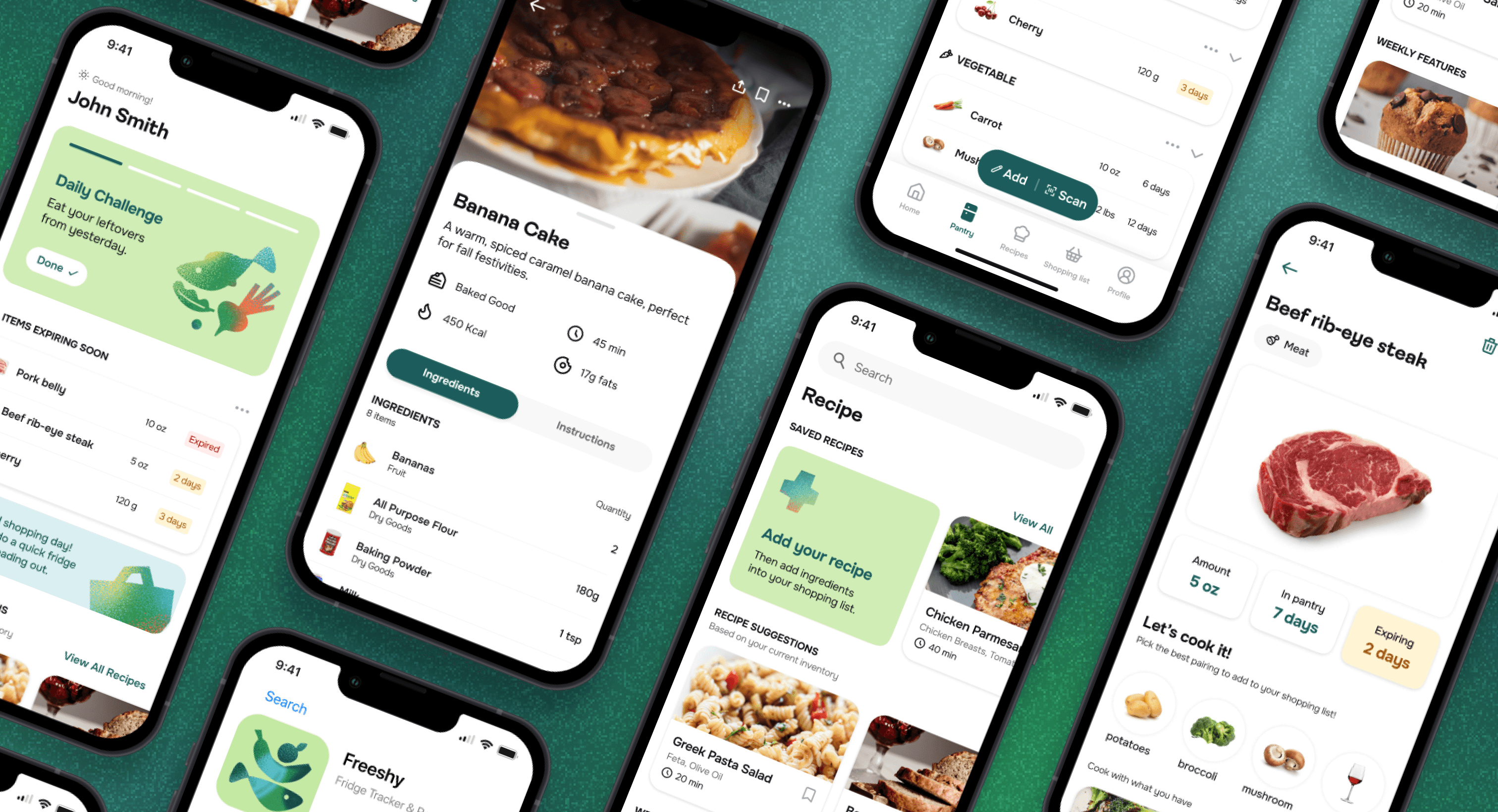
Freeshy helps users fight food waste by turning their kitchen into a smart, actionable space. The app sends reminders for expiring items and suggests recipes tailored to what users have and their dietary preferences. Its clean, intuitive interface makes sustainable eating effortless, turning everyday ingredients into delicious, waste-free meals.
Homepage
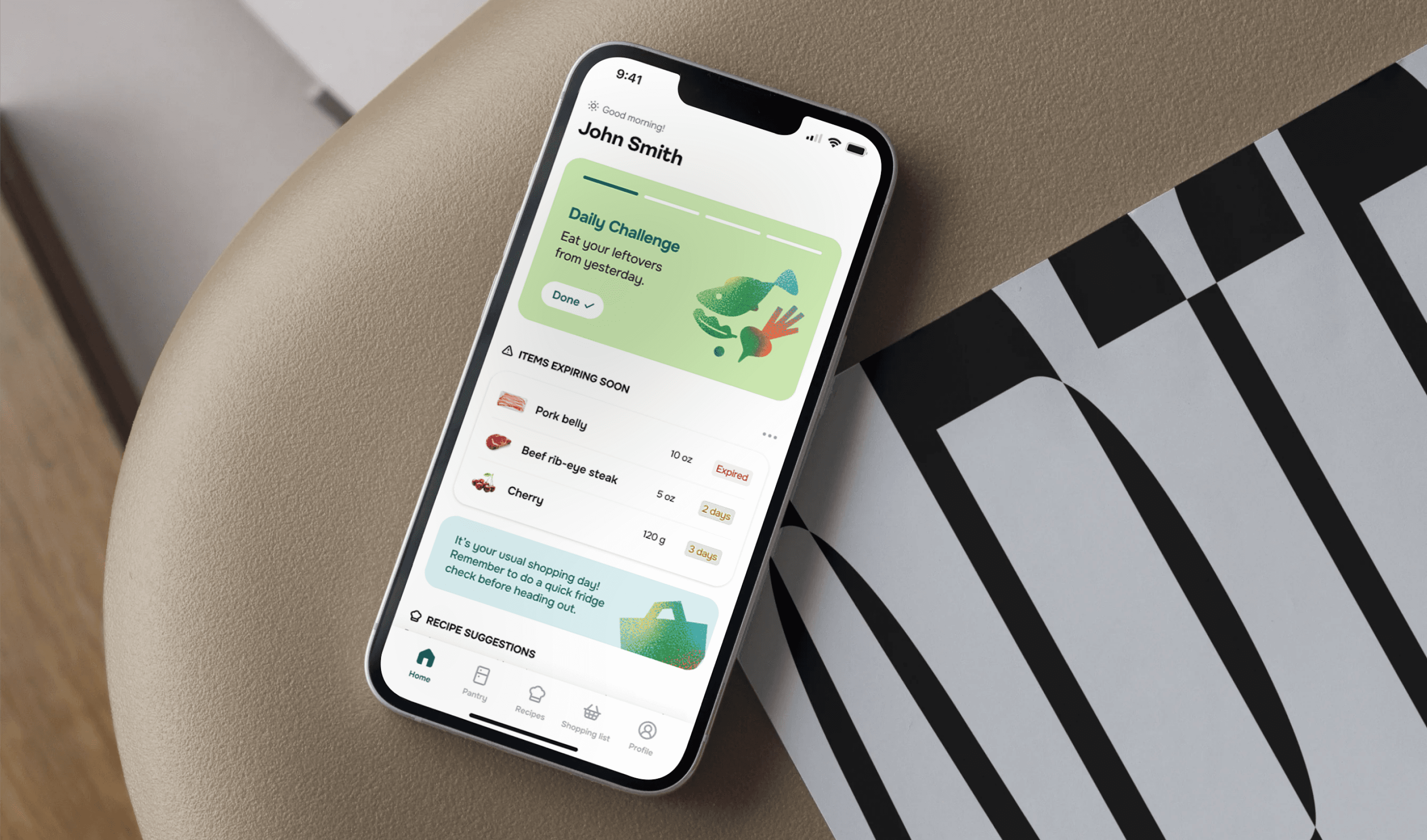
Motivates users with daily challenges to reduce food waste while providing clear reminders for items nearing their expiration, helping them take action.
Gamify eating leftovers

Fridge Tracker
Organizes kitchen items by category and expiration date, allowing users to quickly scan products and keep an up-to-date inventory at their fingertips.
Rediscover your pantry

Suggests tailored recipe based on what users already have in their kitchen and their dietary preferences, making it easy to use up ingredients creatively.
Recipes
Use up what you got

Interactive Prototype
Working on Freeshy reinforced the importance of designing for real life, not ideal behavior. Through research and iteration, I learned that good UX often means doing less, not more, and focusing on reducing friction where users already feel overwhelmed. This project strengthened my ability to translate research insights into clear design decisions, especially around accessibility, clarity, and motivation. Most importantly, it reminded me that the most impactful solutions are the ones that meet people where they are and quietly support better habits over time.
Key Takeaways
Next Project
Mnemo
WORK
WITH
ME
by emailing faithinn@icloud.com